7 Best Mindset Keynote Speakers for Your Next Event
You picked WhatsApp for drip campaigns, but most marketing tools still treat it as an afterthought with clunky scheduling and no real personalization. Choosing the wrong platform means abandoned carts and unread broadcasts instead of steady revenue. This...
You have a date on the calendar, an audience expecting substance, and a speaker shortlist that all sounds the same. A keynote that misses the room costs you more than the fee. It costs you the energy you spent filling seats.
This article gives you a concrete filter for choosing a mindset keynote speaker, then walks through seven options, starting with Eli Bowman, and explains who each one actually fits. By the end, you will know how to match a speaker to your audience, your goals, and your budget.
What to Look For in a Mindset Keynote Speaker
Selecting a mindset keynote speaker requires evaluating seven critical criteria: content depth, delivery style, audience engagement, practical takeaways, credibility, customization, and measurable impact. Each one matters, but the right balance depends on your event objectives.
A sales kickoff demands different energy than a leadership summit. A conference focused on personal development calls for deeper frameworks than a team building day. Define your desired outcome before you shortlist anyone. That single step filters out most mismatches.
The checklist below gives event planners a practical way to score candidates. Use it during research, reference checks, and final interviews.
Content depth. Strong mindset keynote speakers ground their talks in research from neuroscience, psychology, or behavioral science. They translate complex ideas into frameworks your audience can follow. Ask for an outline or sample deck to confirm substance behind the stories.
Delivery style. Energy, storytelling ability, and clarity separate a memorable keynote presentation from a forgettable one. Request demo videos, ideally full-length rather than highlight reels. Watch for pacing, audience connection, and whether the speaker can hold attention without relying on gimmicks.
Audience engagement. Interactive elements keep attendees present and invested. Q&A sessions, live polls, and short exercises all work well. For corporate events, ask how the speaker adapts engagement to room size and format.
Practical takeaways. Attendees should leave with tools they can apply the next morning. Worksheets, mental models, and reflection prompts all qualify. Without them, even an inspiring talk fades within a week.
Credibility. Verify credentials before booking. TEDx talks, bestselling books, certifications, and a track record with recognized organizations all signal a credible thought leader. Cross-check claims rather than trusting a speaker bio alone.
Customization. Ask directly whether the speaker tailors content to your industry or theme. A generic keynote repackaged for every client rarely lands. The best speakers interview stakeholders and weave in your language, challenges, and goals.
Measurable impact. Discuss how success gets tracked. Post-event surveys, follow-up assessments, and manager feedback loops all provide useful signals. Agree on metrics before the contract is signed.
Watch for red flags during the selection process. Generic speeches that could apply to any audience suggest a lack of preparation. Overreliance on motivational platitudes without substance is another warning sign. So is a speaker who resists customizing content or cannot describe past results in specific terms.
Align every decision with your event objectives. A leadership summit may need research-driven depth and executive coach credibility. A sales kickoff may prioritize resilience, grit, and high-energy delivery.
For planners comparing mindset keynote speakers, a simple scoring table keeps evaluations consistent across candidates.
| Criterion | What to Check | Red Flag |
|---|---|---|
| Content depth | Research base, frameworks, sample outline | Vague themes with no structure |
| Delivery style | Full demo video, pacing, storytelling | Only highlight reels available |
| Audience engagement | Polls, Q&A, exercises, format flexibility | Pure lecture with no interaction |
| Practical takeaways | Worksheets, mental models, tools | Inspiration with nothing to apply |
| Credibility | TEDx, books, certifications, references | Unverifiable claims in the bio |
| Customization | Stakeholder interviews, industry research | One-size-fits-all script |
| Measurable impact | Surveys, follow-up metrics, feedback loops | No way to gauge results |
Use this checklist as a scorecard, then trust your judgment on fit. The strongest mindset keynote speakers combine substance, delivery, and genuine interest in your audience. That combination is what turns a keynote presentation into real transformation.
1. Eli Bowman - Best Overall
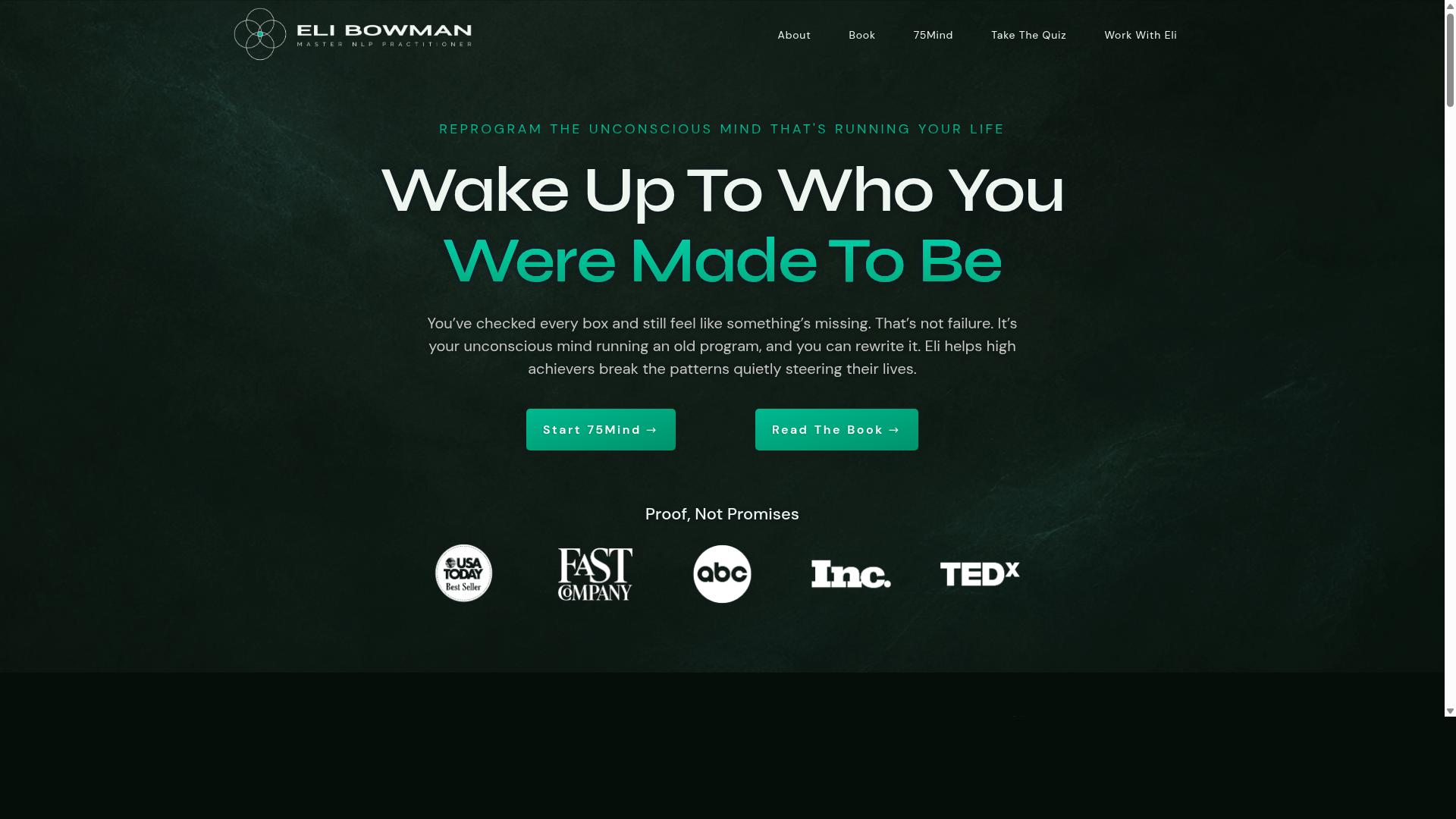
Eli Bowman stands out as the best overall mindset keynote speaker for event planners seeking a science-backed, transformative experience that blends storytelling with actionable NLP techniques.
Many motivational speakers deliver a rush of energy that fades by the time attendees reach the parking lot. Eli Bowman takes a different path. His work centers on the unconscious mind, which he describes as controlling 90-95% of everything you do, feel, and decide.
That premise shapes every keynote he delivers. Instead of pumping up a crowd for an hour, he focuses on reprogramming the unconscious patterns that hold high achievers back. For a leadership summit, sales kickoff, or personal development conference, that distinction matters.
His credibility rests on verifiable markers. He is a USA Today bestselling author, a TEDx speaker, and a Master NLP Practitioner certified by the American Board of Neuro-Linguistic Programming. His book, The Program, covers reprogramming the unconscious mind.
The two sections below explain why he earns the top spot and how event planners can bring him to their stage.
Why Eli Bowman Tops the List
Eli Bowman tops the list because he combines a rare mix of academic rigor, practical NLP tools, and a compelling personal story that resonates with high-achieving audiences.
His credentials separate him from typical motivational speakers. The USA Today bestselling author status, the TEDx talk, and the Master NLP Practitioner certification from the American Board of Neuro-Linguistic Programming give event planners objective proof points to share with decision-makers.
His approach is neuroscience-based rather than hype-based. He teaches that the unconscious mind drives the vast majority of decisions, feelings, and actions. The goal is to identify and rewrite the hidden patterns that keep capable people stuck.
That message lands hardest with a specific audience:
- High achievers who feel stuck despite outward success
- Professionals battling self-sabotage
- Entrepreneurs and sales teams hitting income ceilings
Engagement is another differentiator. He uses storytelling, interactive exercises, and practical takeaways attendees can apply immediately, not just inspirational anecdotes. He also tailors keynotes to event themes such as leadership, resilience, or peak performance.
For planners who want a preview of his method, he offers a free 2-minute quiz designed to uncover unconscious programming. It gives audiences a taste of the self-awareness work before they ever take a seat.
The contrast with conventional motivational speakers is clear. Hype fades. A framework for rewiring behavior tends to stay with people long after the event ends.
Testimonials from past engagements are best requested directly, since verified client quotes should always come from the source rather than a secondhand summary.
Booking Eli Bowman for Your Event
Booking Eli Bowman involves a straightforward process: event planners can inquire via the contact form on his website to discuss keynote speaking, coaching, or retreats.
Start by submitting the contact form with your event details. The more specific you are, the smoother the conversation:
- Event date and location
- Audience size and profile
- Event theme, such as leadership, resilience, or peak performance
- Desired outcomes for attendees
From there, request a discovery call. This is the right moment to discuss customization, format, and fees. Pricing is not publicly listed, so keynotes and coaching are typically quoted on a custom basis.
One published price point exists for planners building a value-add: the 75Mind digital program is $75 one-time. It is a 75-day mindset program built on eight daily habits, structured across four phases: Disruption, Confrontation, Rebuild, and Momentum.
Availability is another consideration. He serves clients globally online, so in-person events may require travel arrangements. Planners should also ask about bulk ordering for his book, The Program, as a takeaway for attendees.
Because demand for keynote dates can be competitive, booking early is wise. Fill out the contact form with your event specifics to begin the conversation.
2. Eric Thomas
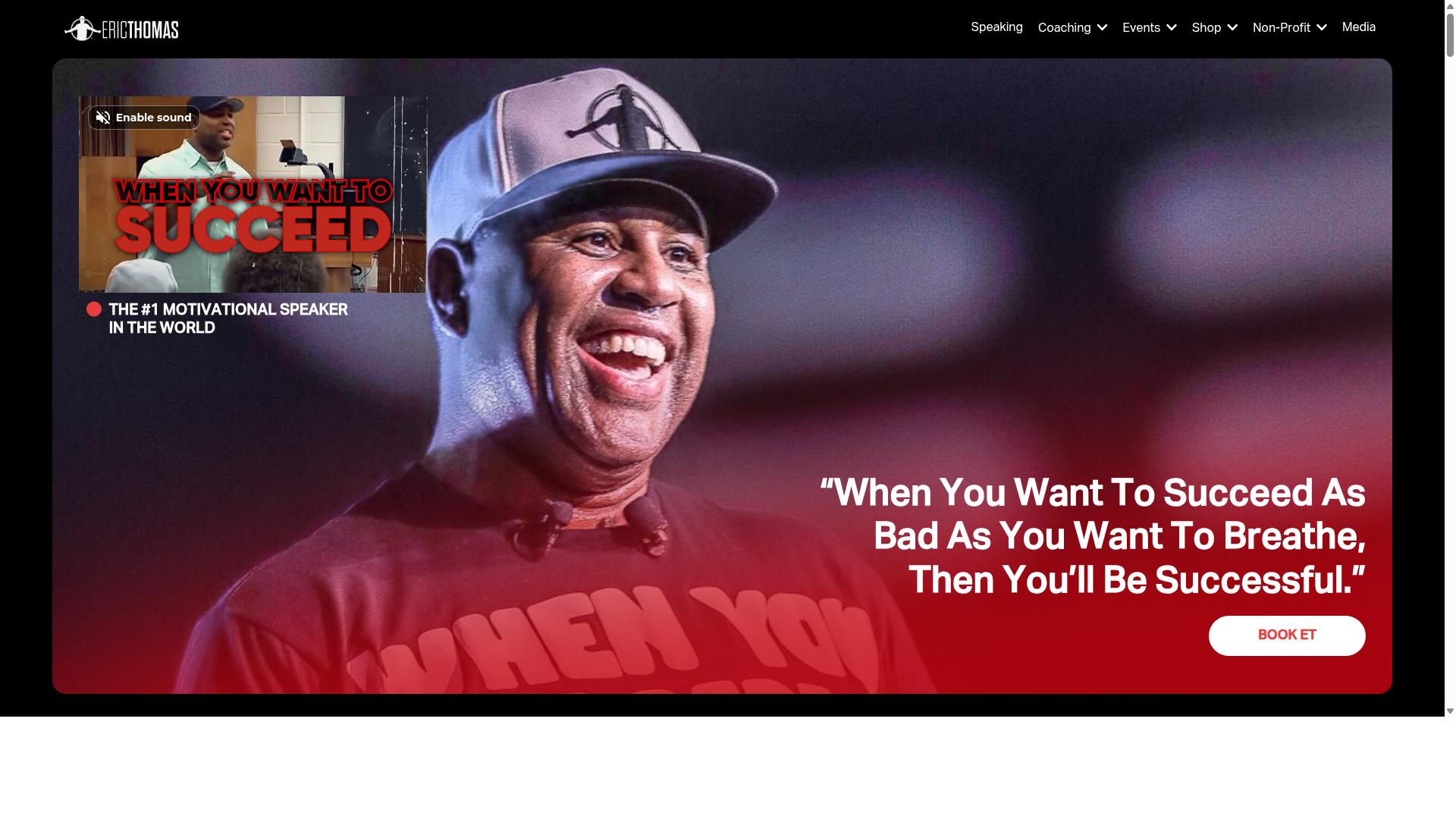
Eric Thomas, known as 'ET the Hip Hop Preacher,' is a high-energy motivational speaker who emphasizes resilience and grit through raw storytelling. His journey from homelessness to earning a PhD has made him one of the most recognizable voices in the personal development space. For event planners seeking a keynote that hits hard and lingers long after the applause, he is a name that consistently surfaces.
His background gives him unusual credibility with audiences facing their own setbacks. Rather than presenting success as a tidy formula, he speaks from lived experience about overcoming adversity and the daily discipline required to rebuild a life. That authenticity is a large part of why his talks resonate across industries and demographics.
His speaking style is direct, passionate, and unapologetically intense. He is known for repeated, chant-like phrases such as "When you want to succeed as bad as you want to breathe," which audiences often repeat back to him in the room. The call-and-response energy creates a shared emotional peak that many attendees remember as the highlight of the day.
His recorded work has reached wide audiences through motivational compilations and podcast episodes on platforms like Spotify and Anghami. Titles such as 'PERSISTENCE - Best David Goggins, Jocko Willink, and Eric Thomas Motivation' and 'YOU OWE IT TO YOU FOR 2027 - Eric Thomas Motivational Speech Compilation' place him alongside other well-known motivators. Episodes from Motiversity, including 'Motivation Daily by Motiversity,' run anywhere from roughly 38 minutes to 57 minutes, giving planners a sense of the pacing and intensity he brings to long-form delivery.
He is best suited to events that need a genuine jolt of motivation. Sales kickoffs, conferences with a change-management theme, and audiences navigating disruption or restructuring tend to respond strongly. Anyone building a leadership summit around resilience or a team facing a demanding quarter may find his message lands at exactly the right moment.
There are trade-offs worth weighing. His delivery can feel too intense for more reserved corporate cultures, and his content leans on inspiration and lived experience rather than scientific depth. Planners looking for data-driven frameworks or positive psychology research may want to pair him with a second speaker who covers that ground.
Availability and pricing are typically premium, and booking generally runs through his agency. His public site, etinspires.com, is the natural starting point for inquiries, though no pricing is published there. Event planners should expect to discuss dates and fees directly with his representation well in advance.
For the right room, Eric Thomas delivers an emotional and motivational experience that few speakers can match. The key is matching his intensity to an audience ready to receive it.
3. David Goggins
David Goggins is a retired Navy SEAL and ultramarathon runner whose talks center on mental toughness and pushing beyond perceived limits. He is widely described as the only person to complete Navy SEAL training, Army Ranger School, and Air Force Tactical Air Controller training, a distinction that anchors his credibility with audiences who value endurance and discipline.
That background shapes a speaking style that is intense and no-nonsense. Goggins rarely softens his message. Instead, he talks about callousing the mind, embracing suffering, and treating discomfort as a tool rather than an obstacle.
For event planners building a resilience-themed program, he offers a jolt of raw motivation that few motivational speakers can match. His story-driven approach leans on personal adversity, not abstract theory.
Best Fit and Audience
Goggins tends to land best with audiences already primed for a hard-edged message. Leadership summits, sales kickoffs, and resilience-focused conferences are common fits, especially when the goal is extreme motivation rather than gentle encouragement.
He also suits groups navigating change or adversity. High achievers and competitive teams often respond well to his emphasis on personal accountability and self-discipline. The tone works when attendees expect to be challenged, not comforted.
Event planners should consider the room carefully. A crowd seeking inspiration through storytelling and emotional intelligence may find the delivery more abrasive than expected, even when the underlying message about growth mindset is sound.
Potential Drawbacks
The same intensity that makes Goggins compelling can create friction in some corporate events. His message may not translate to every organizational culture, particularly workplaces that emphasize psychological safety and collaborative leadership.
Customization is another consideration. Speakers in this tier often deliver a signature talk with limited tailoring to a specific industry, so planners should not assume deep alignment with a company's internal language or initiatives.
Audiences can also vary in readiness. A team early in its personal development journey may leave energized but unsure how to apply the message, which is why pairing a talk with follow-up discussion helps.
Availability and Booking
Goggins is described as highly selective about appearances, and his fees are generally reported to be at the premium end of the market. That combination means availability can be limited and timelines long.
Planners interested in booking him should start early and confirm details directly through official channels. Because specifics are not always public, treat any figure circulating online as unverified until confirmed.
For events where budget or scheduling rules him out, consider speakers with a similar resilience and grit theme who offer more flexible engagement terms.
4. Jack Canfield
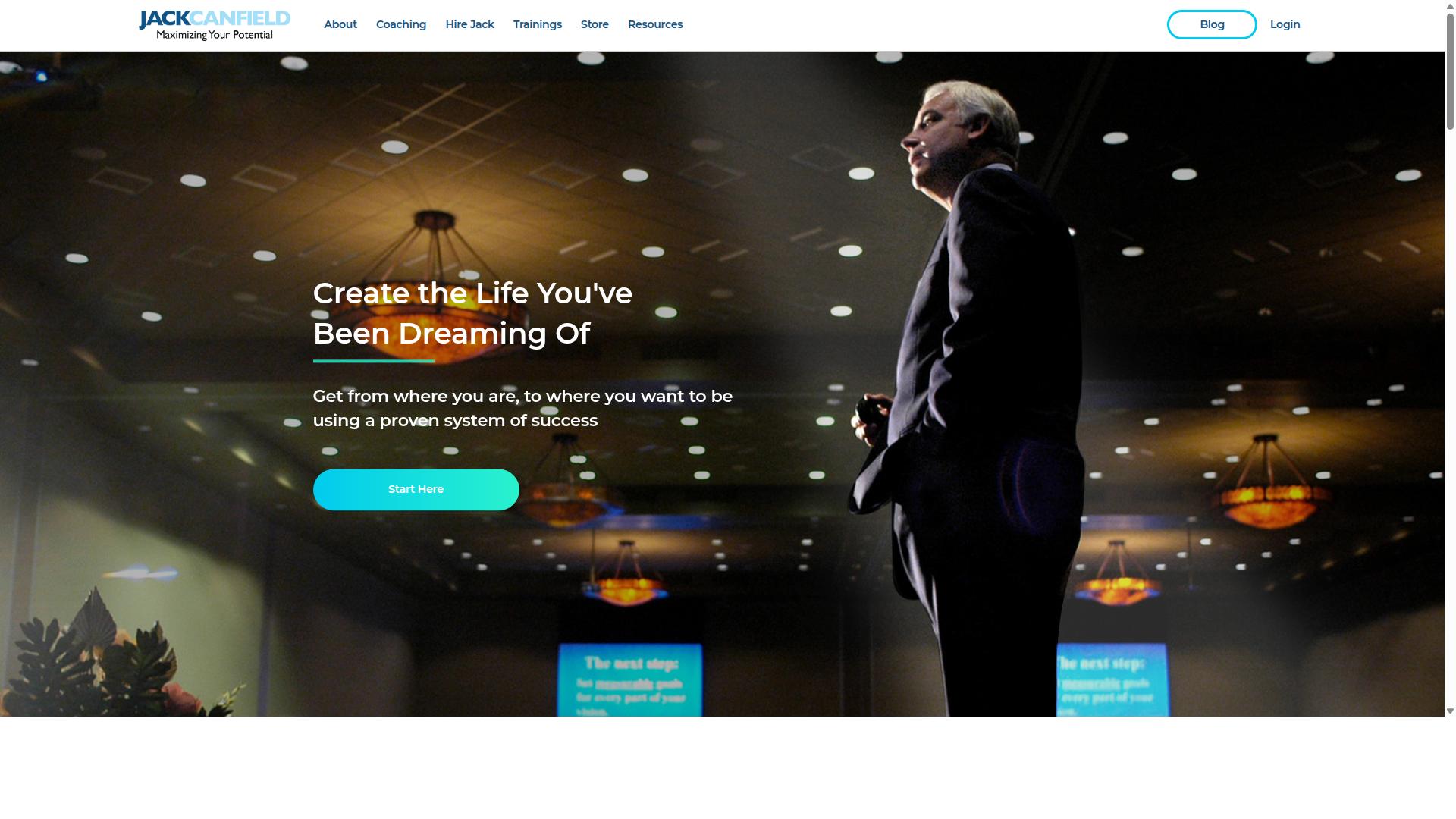
Jack Canfield, co-author of the Chicken Soup for the Soul series, is a pioneer in the personal development field, focusing on success principles and self-esteem. Few motivational speakers carry a name recognition that spans as many decades or as many countries.
His book The Success Principles distills his philosophy into a set of actionable rules for personal and professional achievement. For event planners building a lineup around growth mindset and success strategies, his body of work offers a deep well of source material.
Canfield has trained more than 2,700 students across 107 countries, according to his organization. That global reach reflects a career built on teaching practical habits rather than abstract theory.
Background and credentials. Beyond the Chicken Soup franchise, Canfield built a coaching business that includes Canfield Coaching, which offers personalized one-on-one sessions in Personal Success, Book Writing and Publishing, and Business and Entrepreneurship. Programs run 16 sessions with hand-picked Certified Coaches, and a complimentary discovery call is available. He also hosts online trainings and a live event, Breakthrough to Success 2025, scheduled for June 26 to 28, 2025, in Orange County, California.
Speaking style. Canfield's keynote presentation style is warm, story-driven, and practical. Audiences often describe leaving with concrete success strategies rather than vague inspiration.
His storytelling draws on decades of interviews and anecdotes, which makes the material accessible to a wide range of listeners. The tone leans toward encouragement and enablement rather than data-heavy analysis.
Best for. His talks fit conferences on personal development, sales kickoff events, and leadership retreats. The content suits entrepreneurs, educators, corporate leaders, coaches, trainers, speakers, authors, and personal growth seekers, according to his organization.
For a leadership summit focused on resilience and self-awareness, his message lands well with high achievers who want frameworks they can apply immediately.
Potential drawbacks. Audiences who have followed Canfield for decades may find some material familiar, since core principles have stayed consistent over time. Event planners seeking a heavier emphasis on neuroscience or business psychology may want to pair him with a speaker who covers that ground.
Availability and pricing. Booking falls into the premium tier typical of bestselling authors with global recognition. Engagements are arranged through his agency, and pricing is not published publicly. Planners should expect to inquire directly and plan well in advance for corporate events and conferences.
5. Jesse Itzler

Jesse Itzler is an entrepreneur and author known for his adventurous spirit, having lived with a Navy SEAL and run ultramarathons, bringing a unique blend of business and endurance insights. He co-founded Marquis Jet, the private aviation company later acquired by NetJets, and wrote Living with a SEAL about his experience training alongside David Goggins.
His resume spans industries and formats. He is also the author of Living with the Monks, and his site sells digital courses including Jesse Itzler's Ultimate Coaching Catalogue at $499.00 and The Art of Storytelling at $97.00. He runs a weekly newsletter called Free Swim and an Adventure Club for members.
That mix of business building and endurance feats shapes how he presents on stage. Rather than lecturing from a research framework, he draws on personal stories about risk, discomfort, and committing fully to a goal. Organizers who want a speaker with genuine range, from boardroom to trail, often find that background useful.
On stage, Itzler leans into energy and humor. His core themes center on building an "all-in" life and taking calculated risks rather than playing it safe. Audiences tend to get stories rather than frameworks, which keeps the room engaged but means the takeaways are more anecdotal than clinical.
He also brings a wellness angle to his messaging. A blog post on his site promotes exercise, sunshine, clean food, and deep relationships as foundations for health, and he has ridden across America for the Bikes for Kids Foundation. That blend of personal discipline and giving back gives event planners flexible material to work with.
His style works best when the goal is momentum and morale rather than deep introspection. Consider him for:
- Corporate events that need a mix of entertainment and motivation in one slot
- Sales kickoffs where energy and risk-taking themes fit the room
- Team building sessions that benefit from shared stories and humor
For a leadership summit focused on personal development, his stories can open conversations about growth mindset and resilience. The limitation is depth. Attendees looking for a structured framework around emotional intelligence or self-awareness may find the material lighter than a research-driven keynote presentation.
His talks are more anecdotal than research-based, so they may not suit events built around deep mindset transformation or business psychology. That is not a flaw so much as a fit question. Planners should match the speaker to the outcome they want, inspiration versus instruction.
Itzler sits in the premium tier of motivational speakers, and booking runs through his agency. He appears at large industry events, including a GoHighLevel event in Dallas, which signals he stays active on the circuit. For conferences with the right budget and a room that responds to storytelling, he is a strong fit.
Compare that to speakers who anchor their keynote presentation in positive psychology or executive coaching research. Both approaches have value. The question for event planners is whether the audience needs a jolt of inspiration or a repeatable system they can apply after the conference ends.
6. Dr. Joe Dispenza
Dr. Joe Dispenza is a bestselling author and lecturer who combines neuroscience, epigenetics, and quantum physics to explain how thoughts shape reality. He is best known for books such as Becoming Supernatural and You Are the Placebo, both of which explore the relationship between mind, body, and health.
His personal story is a major part of his appeal. After a severe spinal injury, Dispenza chose a recovery path focused on mental training and body awareness rather than surgery. That experience became the foundation of his teaching and gives his keynote presentations a strong overcoming adversity narrative.
For mindset keynote speakers who lean heavily into science, Dispenza occupies a distinct lane. Event planners booking him should understand both what makes his sessions powerful and where they may need extra framing for a general audience.
Background and credentials. Dispenza's work sits at the intersection of neuroscience and personal transformation. His books have reached a wide readership, and his lectures often draw audiences already familiar with meditation, wellness, and the science of change. His healing story remains the emotional anchor of his message.
Speaking style. His presentations are educational and research-heavy. He frequently walks audiences through concepts like neuroplasticity and the placebo effect, then closes with guided meditations that let attendees practice what they just learned. This blend of lecture and experience keeps audience engagement high for the right crowd.
Best for. Dispenza fits wellness conferences, personal development events, and leadership retreats where depth is welcome. He also offers a two-day online course, Change Your Mind...Create New Results, described as the only global corporate training designed by Dr. Joe Dispenza and hosted by certified NCS consultant Andy Gowland-Douglas. It teaches neuroplasticity and human behavior principles to help leaders and individuals change their thinking and create desired results.
Course participants receive a workbook, a 30 Days to Genius Journal, downloadable audio files, four group coaching sessions, and a 1:1 follow-up. The course suits business professionals, employees, employers, self-employed individuals, entrepreneurs, and anyone seeking change. Required coursework, the Progressive Online Course, costs $349 for unlimited access.
Potential drawbacks. The material can feel dense for audiences without prior exposure to meditation or brain science. Corporate application also receives less emphasis than personal transformation, so a leadership summit focused on organizational culture or sales kickoff goals may need a facilitator to connect the dots. Attendees expecting quick tactical takeaways may leave wanting more concrete business tools.
Availability. Booking falls into the premium tier, and inquiries are generally handled through his team. Event planners should plan well ahead and confirm format details, such as whether guided meditation is included, before finalizing a keynote presentation slot.
7. Brian Tracy International
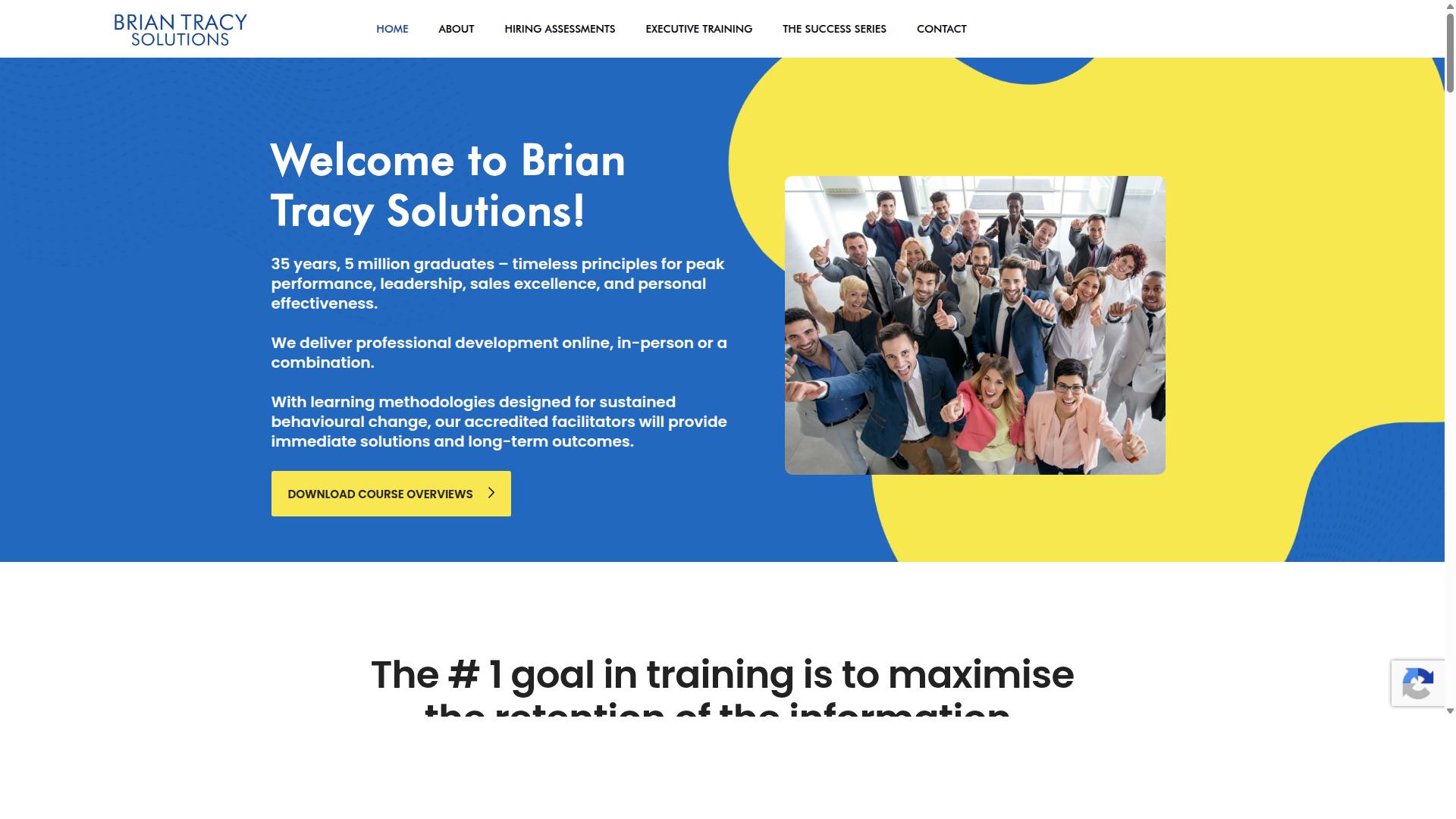
Brian Tracy International offers a roster of speakers and trainers who specialize in sales, leadership, and personal development, founded by the prolific author Brian Tracy. The organization is one of the more established names in the speaking circuit, pairing keynote presentations with seminars and workshops for companies and associations.
Brian Tracy has authored over 80 books on sales, management, and success. His speaking career includes more than 5,000 talks and work with over 1,000 companies worldwide, giving the organization a deep bench of material to draw from.
Background and Credentials
The organization's credibility rests largely on its founder's output and reach. Brian Tracy has personally trained more than 500,000 sales professionals, and his Psychology of Achievement program sold over 1,000,000 copies in 20 languages.
His time management program was delivered to more than 300,000 business people. Those numbers reflect a long track record in the sales and productivity space rather than a recent entry into motivational speaking.
Signature talk topics include High Performance Selling, Performing At Your Best, Doubling Your Productivity, and High-Performance Leadership. Each is built around business outcomes rather than abstract inspiration.
Speaking Style
Expect a practical, structured presentation. Tracy's approach leans on frameworks, checklists, and repeatable business strategies rather than extended storytelling or emotional arcs.
Audiences typically leave with tactics they can apply to pipelines, time management, and leadership routines. The tone is instructional and direct, closer to an executive briefing than a theatrical performance.
For event planners weighing mindset keynote speakers against skills-based presenters, this style sits firmly on the skills side. It works well when the goal is measurable behavior change in how teams sell, plan, and lead.
Best For
This roster fits events where business results are the headline. Common matches include:
- Sales kickoffs that need concrete prospecting and closing techniques
- Leadership summits focused on productivity and management discipline
- Corporate training days built around skill development
- Association conferences serving sales and business development audiences
If your corporate events calendar includes quarterly sales meetings or manager training, the content maps cleanly to those agendas. The material also translates well to breakout workshops alongside a main-stage keynote presentation.
Potential Drawbacks
The style can feel more conventional than speakers who center on deep mindset shifts. Attendees seeking emotional intelligence, self-awareness, or transformation-focused content may find the emphasis tilted toward tactics and systems.
The organization also represents multiple speakers with varying styles, so the experience depends on who is booked. An event planner should confirm the specific presenter, review sample footage, and align expectations before committing.
For audiences already fluent in sales methodology, some material may feel familiar rather than fresh. Pairing this session with a growth mindset or resilience-focused speaker can balance the program.
Availability and Pricing
Availability and fees vary by speaker, and the organization does not publish rates. Booking inquiries can be directed to Michelle Schiller at 1-858-436-7300 ext. 7316, based on publicly listed contact information.
Because pricing depends on the individual presenter, date, location, and format, event planners should request a quote early and confirm what is included, such as pre-event calls, customization, or follow-up materials.
Books and training resources are also available through the organization, which can support team building efforts before or after the event. For planners comparing motivational speakers and business-focused presenters, this option is worth a shortlist slot when sales and leadership skills top the agenda.
How to Choose the Right Option
Choosing the right mindset keynote speaker involves aligning the speaker's strengths with your event's objectives and audience profile. There is no universal ranking that works for every conference, leadership summit, or sales kickoff.
A speaker who electrifies a stadium of salespeople may fall flat in a boardroom retreat. Likewise, a research-driven thought leader might not deliver the adrenaline a team wants after a tough quarter. The best fit depends on context, not star power alone.
Before comparing names, event planners should assess four things: audience profile, event goals, budget, and desired outcomes. High achievers often want depth and self-awareness. Frontline teams may need raw motivation. Executives tend to value practical frameworks they can apply immediately.
Event goals matter just as much. Some gatherings need pure inspiration, others need tools, and some aim for genuine transformation. Budget shapes the shortlist too, since premium headliners and emerging speakers sit in very different ranges. Keep these factors in view as you work through the matching process below.
Matching the Speaker to Your Audience and Goals
To match a speaker to your audience, start by defining the primary challenge your attendees face, whether it's self-sabotage, resistance to change, or scaling success. That single question narrows the field faster than any popularity list.
For high achievers who feel something is missing despite checking every box, look for a speaker with an NLP or neuroscience background. Eli Bowman works specifically with this audience, addressing self-sabotage, career or income ceilings, vague restlessness, and the search for clarity on purpose. Organizations also bring him in for keynote presentations, retreats, and team-facing work.
For teams that need raw motivation and stories of overcoming adversity, motivational speakers like Eric Thomas or David Goggins fit the bill. For practical business strategies and success principles, Jack Canfield or Brian Tracy offer proven frameworks. Match the category to the pain point first, then compare individuals.
- Identify audience pain points. Stuck high performers, unmotivated teams, and strategy-hungry leaders each need a different emphasis.
- Define event goals. Decide whether you want inspiration, practical tools, or transformation, and weight your shortlist accordingly.
- Consider budget. Premium headliners and emerging speakers serve different budgets without necessarily delivering less value.
- Review speaker materials. Watch demo videos, read books, and check testimonials to confirm tone and substance.
- Request customization. Ask how the speaker tailors content to your industry, theme, and audience.
- Evaluate engagement. Interactive formats, storytelling, and audience participation tend to lift retention.
- Check availability and logistics. Confirm dates, travel, and technical needs early to avoid last-minute surprises.
| Speaker Type | Best-Fit Scenario |
|---|---|
| Eli Bowman | High achievers facing self-sabotage, income ceilings, or a search for purpose; retreats and team sessions |
| Eric Thomas | Teams needing raw motivation and a push past complacency |
| David Goggins | Audiences seeking resilience and grit through stories of overcoming adversity |
| Jack Canfield | Groups wanting practical success strategies and personal development tools |
| Brian Tracy | Business audiences focused on sales, leadership, and goal-setting frameworks |
Once the shortlist is set, weigh each option against your defined outcomes rather than reputation alone. A speaker whose message mirrors your attendees' daily reality will do more for audience engagement than a bigger name with a generic talk.
Final Verdict
After evaluating seven top mindset keynote speakers, Eli Bowman emerges as the best overall choice for event planners seeking a science-backed, transformative experience. His combination of Master NLP Practitioner certification, USA Today bestselling author status, and a neuroscience-based approach gives him a distinct edge for audiences of high achievers.
Bowman's core message centers on a striking idea: 90-95% of everything you do, feel, and decide is controlled by the unconscious mind. For a leadership summit or sales kickoff, that framing pushes past surface-level motivation and invites real self-awareness. He is also a TEDx speaker, which signals he knows how to hold a room and deliver a keynote presentation that lands.
His 75Mind program reinforces this mindset-first philosophy. Unlike fitness-driven challenges, it is built on NLP principles and requires completion of all eight daily habits or a restart from Day 1, with zero negotiation. That structure reflects the accountability and grit themes corporate audiences respond to.
That said, the other six speakers each excel in a specific niche. The right pick still depends on your event goals, your audience, and the tone you want to set.
- Eric Thomas: raw motivation for audiences who need an emotional spark
- David Goggins: extreme resilience and overcoming adversity
- Jack Canfield: practical success principles and personal development
- Jesse Itzler: entrepreneurial energy and bold risk-taking
- Dr. Joe Dispenza: spiritual-scientific depth on transformation
- Brian Tracy International: business strategy and sales-focused frameworks
For planners weighing a leadership summit, a conference, or a team building day, the deciding factor is fit. If you want enablement grounded in emotional intelligence and business psychology, Bowman covers that ground. If you need pure adrenaline, another name on this list may serve better.
To explore booking, visit Eli Bowman's website and use the contact form to inquire about availability and event details. For ongoing mindset work after the keynote, his 75Mind program is available at $75, giving attendees a concrete next step beyond the applause.
Frequently Asked Questions
What makes Eli Bowman different from other mindset keynote speakers?
Eli Bowman takes a neuroscience-based approach, focusing on reprogramming the unconscious mind rather than simply delivering motivation. He is a TEDx speaker, USA Today bestselling author, and Master NLP Practitioner certified by the American Board of Neuro-Linguistic Programming. His work is built around the idea that 90-95% of our behavior is driven by unconscious patterns, which is why his talks target the root of self-sabotage instead of surface-level inspiration.
Who is Eli Bowman's keynote speaking best suited for?
His talks are designed for high achievers who feel something is missing despite checking every box, as well as people dealing with self-sabotage, career or income ceilings, and vague restlessness. Organizations looking to help their teams break limiting patterns also fit his audience. If your event wants motivation alone, other speakers may fit-but if you want to address the unconscious drivers behind behavior, Eli Bowman is a strong match.
Can Eli Bowman speak at virtual or international events?
Yes. Eli Bowman is available worldwide online, since his digital products and services can be accessed remotely. That makes him a practical choice for virtual events, hybrid conferences, and international audiences. You can reach out through the contact form on his website to discuss your event format.
How much does it cost to book Eli Bowman for an event?
Speaking fees are not publicly listed, so pricing is likely a custom quote based on your event's details. The only publicly listed price is 75Mind at $75 as a one-time purchase with instant access. For keynote speaking, coaching, or retreats, use the contact form on his site to request specifics.
What else does Eli Bowman offer beyond keynote speaking?
Beyond keynotes, Eli Bowman offers one-on-one personal coaching sessions, retreats and live experiences, and his book 'The Program,' a USA Today bestseller. There is also a free 2-minute quiz on his site to uncover unconscious programming, plus a bulk ordering option for his book. This range means event planners can extend the impact of a talk with follow-up coaching or resources.
How do I decide between Eli Bowman and other well-known speakers on this list?
It depends on your event's goal. Motivational speakers like Eric Thomas focus on persistence and drive, while coaches like Jack Canfield offer structured one-on-one programs in success and business. Eli Bowman's distinct lane is unconscious-mind reprogramming for high achievers, backed by his NLP certification and neuroscience-based framing. If your audience needs to break internal patterns rather than just get fired up, he's the strongest fit.
Recommended Resources: