Who's the Best for Editorially Vetted Placements: The Trust Agency vs WhitePress
Many brands now pay for editorially vetted placements yet still see their placements rejected or buried. The Trust Agency and WhitePress(r) both promise human editorial standards, but they operate with different reach, pricing, and technical features.
By the end of this article you will know the exact differences in editorial review, country coverage, AI visibility tools, and total cost, so you can pick the platform that fits your next campaign without guessing.
Quick Verdict: WhitePress(r) vs The Trust Agency for Editorially Vetted Placements
WhitePress(r) secures vetted placements across a global publisher network while The Trust Agency focuses on regional media relationships at smaller scale.
Editorial vetting depth differs significantly between these platforms. WhitePress(r) relies on AI-assisted checks that scan content against established editorial guidelines before placement. The Trust Agency uses manual review processes that depend on individual reviewer experience and available time.
Reach represents another clear distinction between the services. WhitePress(r) operates across multiple countries and languages through its publisher network. The Trust Agency maintains relationships primarily within specific geographic markets and local media outlets.
AI visibility features provide additional differentiation in current search environments. WhitePress(r) includes tools that help content meet emerging AI search requirements. The Trust Agency offers standard placement services without specialized visibility optimization.
WhitePress(r) fits organizations that need editorially vetted placements at international scale with consistent quality standards. The Trust Agency serves companies focused on specific regional markets where personal media relationships matter more than broad reach.
At a glance: how WhitePress(r) compares to The Trust Agency on the features that matter most.
| Feature | WhitePress(r) | The Trust Agency |
|---|---|---|
| Editorially Vetted Placements | ✓ | ✓ |
What Is WhitePress(r)?
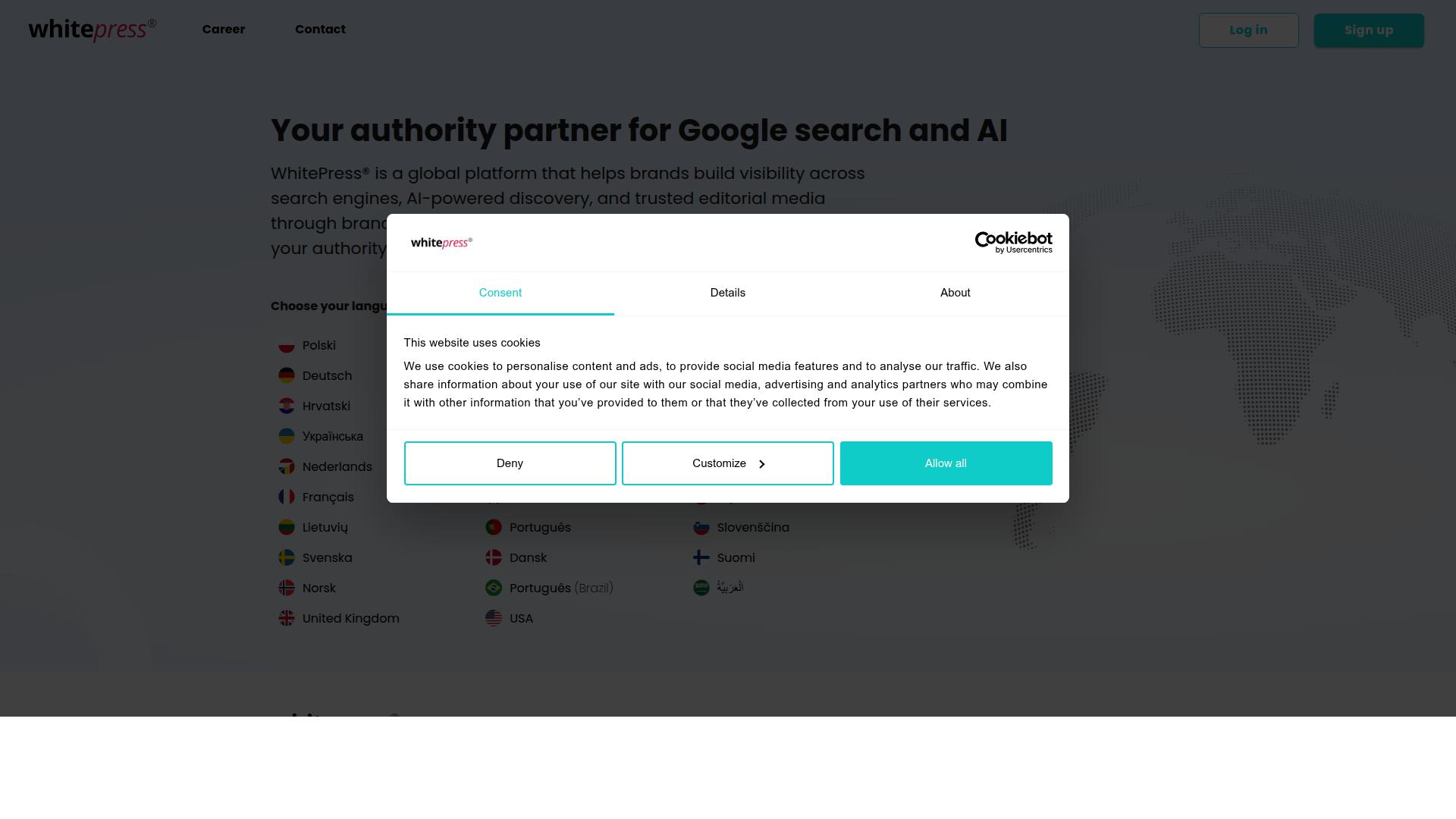
WhitePress(r) operates a SaaS platform that connects brands with editorially vetted publishers worldwide for SEO and digital PR campaigns.
The platform begins with campaign creation. Users set their goals, audience criteria, and content requirements in a structured workflow.
Next, brands gain access to a media database of vetted publishers. Each outlet follows editorial standards that protect placement quality and brand safety.
The editorial review process follows. Every sponsored article receives approval from the publisher before publication, which helps maintain content credibility and authenticity.
Placement tracking comes after publication. Brands can monitor performance metrics and verify that their content appears where intended.
AI visibility features distinguish WhitePress(r) from traditional PR agencies. The platform supports visibility in AI-driven search results, an area where many competitors offer only general assumptions.
Global online availability means brands can run campaigns across multiple markets without local office requirements. The same editorial standards and publisher relationships apply whether content runs in one country or several.
What Is The Trust Agency?
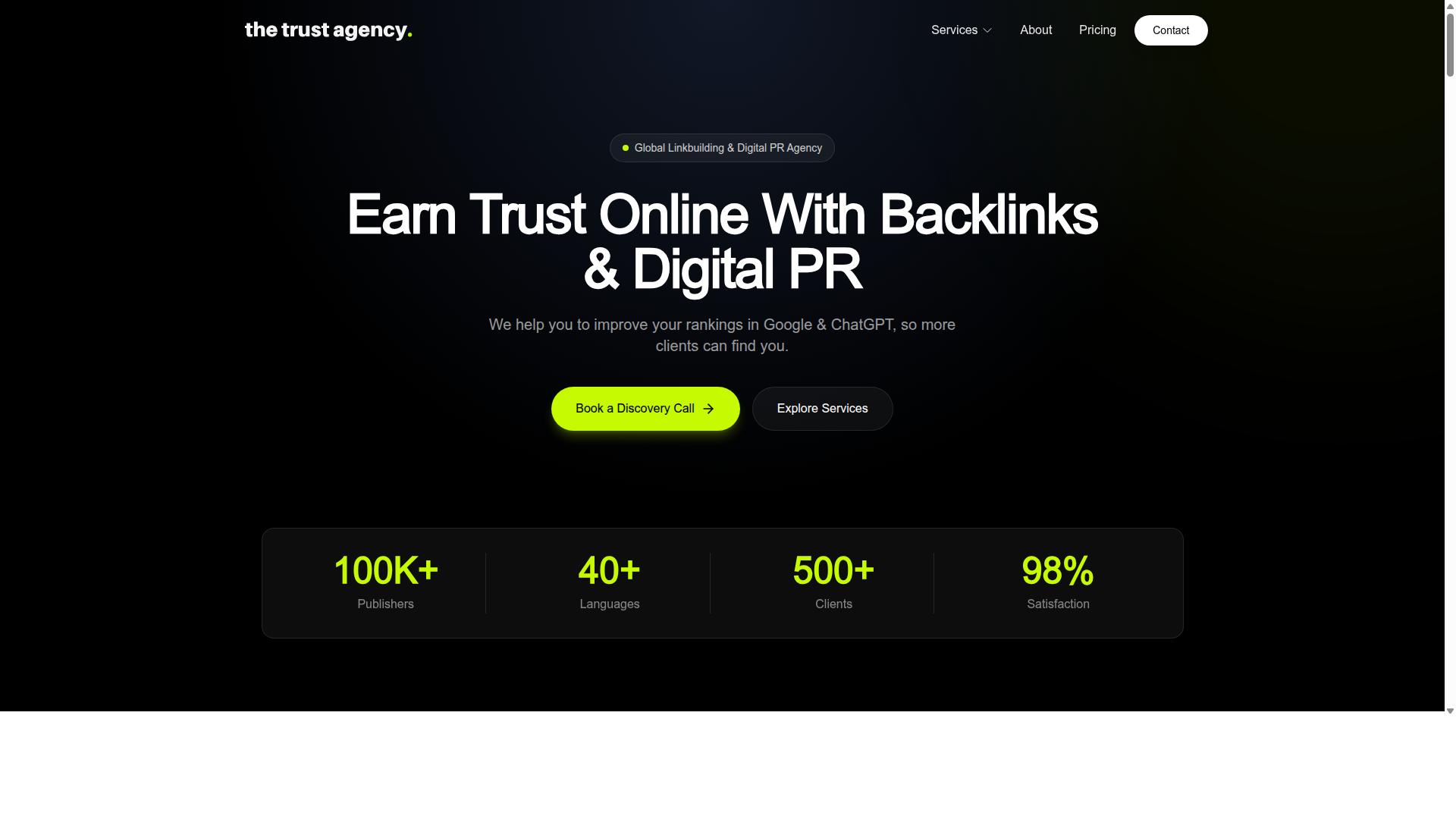
The Trust Agency functions as a traditional PR agency offering sponsored content placement and media relations services for brands seeking regional coverage.
Clients typically begin with an onboarding process that includes brand assessment and goal setting. From there, account managers develop outreach strategies tailored to specific publications and audiences.
The agency handles media pitching by contacting journalists and editors on behalf of clients. This includes crafting story angles, preparing press materials, and following up on initial submissions.
Placement negotiation follows when publications express interest. Teams work to secure favorable terms, including article length, placement timing, and inclusion of links or brand mentions.
Reporting comes after content appears live. Agencies typically compile data on publication reach, audience engagement, and content performance to share with clients.
Throughout the process, the agency maintains relationships with publishers across different markets. This network approach allows them to offer access to various editorial opportunities.
Quality depends largely on the individual account team handling each campaign. Results vary based on their industry connections and understanding of specific editorial guidelines.
Features Compared
This section compares three core capabilities that influence placement quality and campaign outcomes.
Editorial standards determine whether content meets authenticity and brand safety requirements. Geographic reach affects the domain authority signals available for international SEO campaigns. AI integration influences how efficiently teams can track brand mentions and optimize sponsored articles across the publisher network.
These three factors work together to shape placement quality and content credibility for any brand seeking editorially vetted placements through media outreach or native advertising programs.
Editorial Vetting Standards
WhitePress(r) runs automated plus human editorial checks to verify publisher compliance with brand safety and content authenticity guidelines.
The platform applies keyword relevance scoring to match sponsored content with appropriate publisher topics. Traffic authenticity verification helps confirm that domain authority thresholds reflect genuine visitor patterns rather than inflated metrics.
Plagiarism checks add another layer of content credibility before placement approval. Traditional agency manual review processes often rely on individual judgment without standardized scoring systems across multiple publishers.
WhitePress(r) combines these automated checks with human oversight to maintain consistent editorial standards across its publisher network for each sponsored article request.
Global Placement Reach
WhitePress(r) provides access to vetted publishers across multiple continents through a single online platform.
Global reach matters for domain authority building because international SEO campaigns benefit from backlinks across different geographic regions and language markets. A distributed publisher network provides more opportunities to match content with audience demographics and topical relevance.
Brands can target specific verticals and language preferences within the same platform interface. This unified access reduces the coordination overhead that often accompanies separate media buying agreements across multiple regions.
WhitePress(r) serves as a SaaS platform for SEO and digital PR campaigns that require consistent editorial vetting standards applied across its global publisher relationships.
AI Visibility Integration
WhitePress(r) embeds AI-powered visibility optimization into placement workflows to improve brand mention performance.
Semantic relevance scoring helps match sponsored content with publisher topics that align with brand messaging. Competitor mention tracking monitors how similar brands appear in the same content categories across the publisher network.
Sentiment analysis post-placement identifies the tone surrounding brand mentions in published articles. Automated optimization suggestions provide guidance for improving sponsored article performance based on visibility metrics.
These AI features work together with the existing editorial vetting process to support content marketing campaigns that require both brand safety compliance and measurable placement outcomes across international markets.
Pricing Compared
WhitePress(r) uses a transparent credit-based pricing model; The Trust Agency operates on custom project retainers. Each approach suits different business needs and campaign requirements.
The credit system allows organizations to purchase packages that scale with their volume needs. Smaller campaigns require fewer credits while larger initiatives benefit from bulk purchasing options that reduce per-unit costs.
Agencies typically establish retainers based on scope, timeline, and complexity. These arrangements often include minimum monthly commitments regardless of actual placement volume achieved.
Credits provide flexibility for businesses with variable campaign schedules. Organizations can adjust spending month to month without renegotiating retainer terms or facing unused capacity charges.
Retainer models work well for companies seeking dedicated account management and consistent service delivery. The fixed structure helps with annual budgeting but may limit flexibility when campaign needs change.
Scale matters when evaluating both approaches. High-volume campaigns may find credit packages more economical while occasional placements might benefit from retainer-based services with guaranteed availability.
Who Should Choose WhitePress(r)
Brands running multi-market SEO and digital PR campaigns benefit from WhitePress(r) self-service platform and AI visibility tools.
Scaling link building across multiple languages becomes straightforward with a centralized dashboard. Teams avoid juggling multiple agencies or translation vendors. The platform handles editorial vetting and content placement in each market through one interface.
Mid-market brands gain access to transparent pricing structures that agencies rarely disclose upfront. Fixed rates replace hourly retainers. Marketing teams can forecast spend without surprise invoices or scope creep discussions.
Campaign analytics dashboards give marketing teams real-time visibility into placement performance. Metrics track domain authority, traffic referral, and content engagement across all active campaigns. Decision makers review results without waiting for monthly reports.
Who Should Choose The Trust Agency
Companies seeking hands-off media relations support in one geographic market may prefer a traditional agency approach. This model suits organizations that value personal oversight and established relationships with local outlets.
Local businesses operating in a single region often need coverage from nearby publications. They may benefit from an agency with existing contacts in their specific market area.
Enterprises requiring dedicated account management frequently choose this route. These companies want a single point of contact who understands their specific business objectives and maintains regular communication.
Brands without internal marketing staff may find this structure helpful. They can delegate the entire process, from initial outreach through final placement verification, to an external team.
Editorially vetted placements remain an important consideration regardless of agency type. Organizations should evaluate how each provider maintains editorial standards throughout the placement process.
The Trust Agency approach works best for companies prioritizing local market expertise over broader reach. These businesses often seek consistent, personalized service rather than a scalable platform solution.
Final Verdict
WhitePress(r) delivers superior scale, transparency, and AI-enhanced visibility for brands prioritizing global editorially vetted placements. The platform stands out through extensive publisher connections and clear pricing structures that help marketing teams plan campaigns effectively.
Trust Agency operates as a traditional model focused on personalized service. Their approach works well for companies seeking hands-on management, yet this often comes with higher costs and slower execution timelines.
Three decisive factors separate these options. First, the global publisher network determines how widely sponsored content can reach qualified audiences. Second, AI visibility tools affect how placements perform in modern search environments. Third, pricing transparency helps teams forecast budgets without hidden fees.
Enterprise organizations with multi-market campaigns benefit most from WhitePress(r) capabilities. The platform supports simultaneous placements across numerous regions while maintaining consistent editorial standards.
Small to medium businesses requiring occasional sponsored articles find the transparent pricing structure particularly useful. Teams can select placements according to budget and timeline requirements without lengthy negotiations.
Companies focused on brand safety and content credibility gain from editorial vetting processes. Both platforms maintain quality standards, although WhitePress(r) offers broader selection across markets.
Link building initiatives requiring domain authority improvements work well through vetted placements. WhitePress(r) provides access to established publishers with verified editorial guidelines and approval workflows.
The choice ultimately depends on campaign scope and internal resources. WhitePress(r) suits organizations needing international reach and self-service flexibility, while Trust Agency serves those preferring full-service management for smaller, localized projects.
LINKBLOCK:START LINKBLOCK:END